Since its foundation, against the backdrop of today's climate challenges, Anima Mundi has championed both the human right to an unspoilt natural environment and nature's own right to exist and regenerate.
At the heart of this vision lies the cultivation of respect for water and an understanding of its essential role in the planet's entire web of life.
Beginning with water, we broaden our perspective to embrace respect for biodiversity, invite awareness of far-reaching climate change and help create a culture of cherishing life.
Water is essential to the entire planetary ecosystem.
Wherever there is life, there is always water.
Sources:····
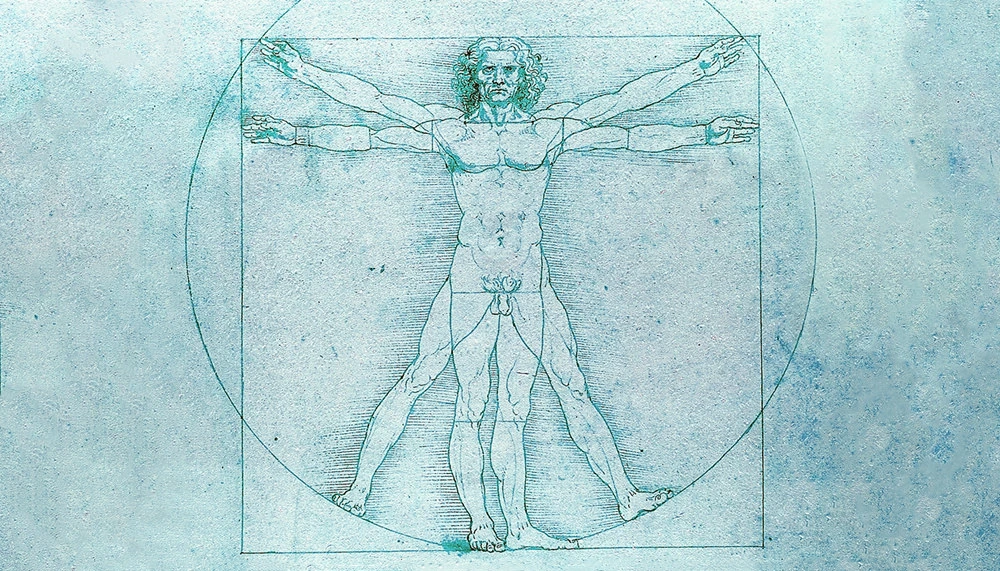
Humanity / Homo Naturans
Humanism – Education – Creativity – Compassion
Together, we discover new dimensions of our humanity.
Anima Mundi opens up access to essential discoveries in neuroscience, biology, medicine and physics. These help us understand more deeply how we function as human beings, and how profoundly we are influenced and shaped by the wider whole to which we belong.
Through these interconnected discoveries, which broaden our horizons, humanity is redefining itself at an ever faster pace. More than ever, we are becoming aware of the mysteries within our cells and of our true place in the ecosystem. New rights are thus emerging, such as the right to a clean, healthy and sustainable environment, recognised by the UN in 2022.
Through courses, workshops and educational activities, Anima Mundi shares these discoveries and nurtures participants' curiosity about the new, their creativity and their compassion.
Human health is closely bound to the health of our surroundings and our relationship with nature.
Sources:···
Networking / Communitas
Solidarity – Partnerships – Social innovation – Community
Together, we build a network that cherishes life.
Working title
Across the planet, we are living through a severe climate crisis, with ever more of its dimensions becoming visible. The planet's temperature is rising, the climate is changing, and biodiversity is increasingly under threat. Against this backdrop, a water crisis is already taking shape, calling for an entirely different approach: water is not a commodity, and it is more than a resource. It is the source of life on Earth. And when we see it in this way, we see the planet's entire web of life differently.
Paradoxically, in these times of crisis, more and more people are becoming aware of nature's importance and purpose. Quietly but surely, empathy for nature is blossoming within humanity.
Anima Mundi takes part in this process of bringing humanity closer to water and biodiversity and, through projects, events and courses, helps create a network that cherishes life.
The planetary environmental crisis deepens year by year, and humanity, after much hesitation, is beginning to act together.
Sources:··
Terra Mirabilis
Water and life
100% of the oxygen released by plants comes from water.
How this relates to the programme
Through Terra Mirabilis, we step into the simplicity and grandeur of nature and discover the essential role of water and forests in the planet's web of life.
References:
Terra Mirabilis
Mountains and forests
Mountains give us up to 60% of the world’s fresh water, and forested river basins provide 75%.
How this relates to the programme
Through Terra Mirabilis, we step into the simplicity and grandeur of nature and discover the essential role of water and forests in the planet's web of life.
References:·
Terra Mirabilis
River flows and imbalances
Only 1 in 3 of the world’s river basins recorded normal river flows in 2024, with the rest experiencing drought or flooding; in August 2026, the Danube was reported to have fallen to a historic low of 1,370 m³/s.
The figure for the Danube and its description as a “historic low” remain to be confirmed against the INHGA reference.
How this relates to the programme
Through Terra Mirabilis, we step into the simplicity and grandeur of nature and discover the essential role of water and forests in the planet's web of life.
References:·
Homo Naturans
Longevity
Global life expectancy reached 73.3 years in 2024, an increase of 8.4 years since 1995.
How this relates to the programme
Through Homo Naturans, we discover that we are a living part of nature and learn to listen to the wisdom of our own bodies.
References:
Homo Naturans
Our connection with nature
And we can live better when we connect with nature: a quarter of an hour’s walk in the forest reduces the stress hormone by 16% and doubles the activity of the part of the nervous system that calms the body.
How this relates to the programme
Through Homo Naturans, we discover that we are a living part of nature and learn to listen to the wisdom of our own bodies.
References:
Homo Naturans
Caring for children
And when we care for the most vulnerable among us: in Romania, obesity among children and young people aged 5–19 rose from 2% in 2000 to 9% in 2022, while worldwide, the number of children and adolescents living with obesity increased from 31 million in 1990 to 170 million in 2024.
How this relates to the programme
Through Homo Naturans, we discover that we are a living part of nature and learn to listen to the wisdom of our own bodies.
References:·
Communitas
A changing climate
In 2024, the global annual average temperature exceeded the 1.5°C threshold above the pre-industrial level referred to in the Paris Agreement for the first time.
How this relates to the programme
Through Communitas, we create a network that cherishes life, where people, communities and institutions meet and work together for water, biodiversity, understanding the human body and social harmony.
References:
Communitas
The web of life
Nearly 50,000 species of animals, plants and fungi are now threatened with extinction.
How this relates to the programme
Through Communitas, we create a network that cherishes life, where people, communities and institutions meet and work together for water, biodiversity, understanding the human body and social harmony.
References:
Communitas
Shared responsibility
In its unanimous advisory opinion of July 2025, the International Court of Justice confirmed that states have a legal obligation to prevent significant environmental harm caused by global warming.
How this relates to the programme
Through Communitas, we create a network that cherishes life, where people, communities and institutions meet and work together for water, biodiversity, understanding the human body and social harmony.
References:
Source and context
Oxygen released through photosynthesis
Original study · JACS, 1941
Experiments by Ruben, Randall, Kamen and Hyde using isotopically labelled oxygen established that the oxygen released through oxygenic photosynthesis comes from water.
This percentage refers to the origin of the oxygen released in this process. It does not mean that 100% of atmospheric oxygen is currently produced by plants. The article’s metadata have been confirmed; the publisher’s full text requires access.
The report Mountains and Glaciers: Water Towers shows that mountains supply around 55–60% of the world’s annual fresh water flows. Water from these regions sustains communities and ecosystems downstream.
The estimate refers to annual fresh water flows, rather than all the planet’s water reserves.
State of Global Water Resources 2024 · published in 2025
The report shows that only around one third of the world’s river basins recorded normal conditions in 2024. In the others, river flows were above or below normal.
The observations refer to 2024. “Above or below normal” does not mean that every river basin experienced both drought and flooding.
The figure of 1,370 m³/s and its description as a “historic low” in the supplied text remain unconfirmed. Official bulletins for Baziaș report 1,400 m³/s on 11 August and 1,350 m³/s on 13 August 2026, compared with the long-term August average of 3,900 m³/s.
These sources confirm very low daily river flows, but do not confirm the exact figure of 1,370 m³/s or a historic low for the month as a whole.
The UN Population Division estimates life expectancy at birth at 73.3 years in 2024, an increase of 8.4 years since 1995.
This indicator describes mortality across a population. It does not represent a guaranteed lifespan for an individual or the number of years lived in full health.
The study included 280 healthy male students with an average age of around 22. After walks lasting 16 ± 5 minutes, salivary cortisol was 15.8% lower in the forest than in the city. The HF component of heart rate variability was 102% higher.
These are average, immediate responses within this sample. The HF component is an indicator associated with parasympathetic activity; the result does not mean that the activity of the entire nervous system doubled, nor does it guarantee the same effect for every participant.
UNICEF Romania reports an increase in the prevalence of obesity among children and adolescents aged 5–19, from 2% in 2000 to 9% in 2022. The national estimates are coordinated by NCD-RisC.
The data are modelled population estimates. Obesity and overweight are different indicators; the figures here refer to obesity.
The Obesity and overweight fact sheet, updated on 7 October 2026, reports 170 million children and adolescents aged 5–19 living with obesity in 2024, compared with 31 million in 1990. It cites the NCD-RisC analysis published in Nature in 2026.
These are population estimates. These figures should not be confused with the 1990–2022 series in the earlier publication or with other projections for 2025.
The analysis, based on six datasets, estimates the global annual average temperature in 2024 at 1.55 ± 0.13°C above the pre-industrial level. It was likely the first calendar year above 1.5°C.
A single year above this level does not constitute a breach of the Paris Agreement’s long-term temperature goal, which is assessed over decades.
The IUCN Red List includes 175,909 assessed species, of which 49,505 are threatened with extinction, according to the update of 9 July 2026.
The figure refers to species assessed by IUCN. It is neither an inventory of all species on the planet nor the number of species that have already become extinct.
The Court unanimously confirmed states’ obligations to exercise due diligence and cooperate to prevent significant harm to the climate system and the environment.
The opinion is advisory. The binding character belongs to the obligations under international law that it clarifies; it does not make the opinion itself a binding judgment.
Terra Mirabilis is Anima Mundi’s long-term programme dedicated to the natural and cultural heritage of Romania and the Balkan Peninsula.
Through Terra Mirabilis, we step into the simplicity and grandeur of nature and discover the essential role of water and forests in the planet's web of life.
As an expression of its commitment to water and forests, and after several years of preparation, Anima Mundi launched the project “Aqua Mater. The essential role of water in the ecosystem” in the Apuseni Mountains.
Communitas is Anima Mundi’s long-term programme dedicated to solidarity, partnerships and social innovation.
Through Communitas, we create a network that cherishes life, where people, communities and institutions meet and work together for water, biodiversity, understanding the human body and social harmony.
To build an active network, Anima Mundi began a series of collaborations in 2026. In the first part of the year, it supported Rost Institute in organising the ROST de Umanitate festival. In October 2026, it began a long-term collaboration with ADI Iti Moții Țara de Piatră to carry out projects in the Apuseni Mountains. Their first joint action is the submission of the project “Protecting the Arieș Basin through Community Engagement and Institutional Dialogue”. Anima Mundi is also developing ideas for joint activities and projects with the newly founded Asociația Producătorilor din Apuseni (APA).